1 5 Transaction Analysis- from accounting equation to journal entries Financial and Managerial Accounting
1 5 Transaction Analysis- from accounting equation to journal entries Financial and Managerial Accounting
 admin

It details various transactions such as cash investments, service payments, loans, purchases, and withdrawals over the month. The requirement is to record these transactions properly in a QuickBooks Accountant structured statement to reflect their effects on assets, liabilities, and equity. Posting is the process of forwarding journal entries from journal book to ledger book, commonly known as general ledger. After journalizing, the accounting transactions are posted to their relevant ledger accounts.

Money Instructor
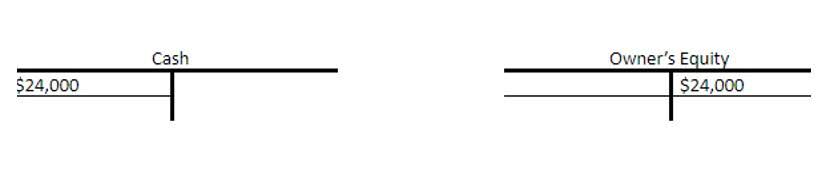
This means that every transaction that is recorded in accounting records must have at least two entries; if it only has one entry the equation would necessarily be unbalanced. Shareholders’ equity, also known as owners’ equity or stockholders’ equity, represents the residual retained earnings balance sheet interest in the company’s assets after deducting liabilities. Assets represent the economic resources owned by a company that have measurable value and are expected to provide future benefits. Examples of assets include cash, accounts receivable, inventory, property, equipment, and investments. In the second step, the nature of accounts identified in the first step is determined. For example, in the above transaction of Robert Traders, the cash account is an asset account by nature, and the capital account is an equity account by nature.

The Reality of Implementing AI in Record-to-Report
- “Accounts Receivable” increases as the customer owes money, and “Service Revenue” increases as income is earned.
- Last part of the chapter considers the links between Financial Statements and the analysis of the trial balance, as an important accounting tool.
- In this blog, we will explore the concept of transactions, breaking down what they are and its different types.
- The accounting equation must always remain in balance after every transaction.
They help in accurately reflecting the business’s asset value, expenses, or other financial changes within the organization. To be effective, your company should always have a balance between what it owns and what it owes. When you analyze an accounting transaction, you’re determining how that transaction affects the basic accounting equation.
What is a Chart of Accounts?
- This demonstrates how an increase in assets can be offset by an equal increase in liabilities, accurately reflecting the company’s financial position.
- On the liabilities and equity side of the equation, there is also an increase of $20,000, keeping the equation balanced.
- The liability of $4,000 worth ofservices increases because the company has more unearned revenuethan previously.
- Assets and equity are just two of the six classifications of accounts, the other four being liability, withdrawal, revenue, and expense.
- In this way, transactions are recorded impacting at least two accounts and ensuring that the accounting equation is balanced.
- Net income (loss) is computed into retained earnings on the statement of retained earnings.
- Liabilities represent obligations the business owes to outside entities, including loans or amounts due to suppliers.
This systematic application of debits and credits for every transaction ensures accurate financial record-keeping and the continuous balance of the accounting equation. Transaction analysis applies to various common business activities, each impacting the accounting equation differently. When a business makes a cash sale, both the Cash account (an asset) and the Sales Revenue account (an equity component) increase. The Cash account is debited, and the Sales Revenue account is credited, reflecting asset inflow and increased owner’s equity. This transaction directly boosts the asset side and the equity side of the accounting equation, keeping it balanced.

A journal entry documents the date of the transaction, the specific accounts affected, and the corresponding debit and credit amounts. Each entry in the journal must show transaction analysis in accounting that the total debits equal the total credits for that transaction, reinforcing the double-entry system’s balancing mechanism. The process begins by recognizing any event with a monetary impact as an accounting transaction. This includes activities from sales and purchases to payments and investments.